
Ancient Deciduous Forests
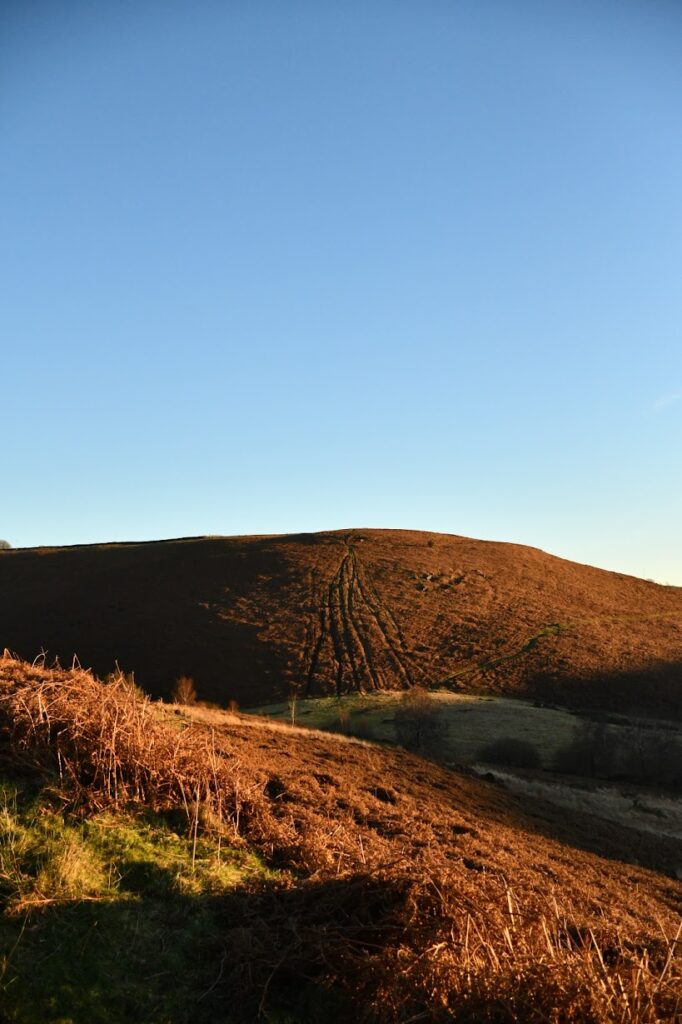
During February, the Common can look bleak and bare. In winter it is an open moorland that often seems asleep under a dense blanket of mist. Although the landscape in its height is full of bracken, gorse, grasses, heather, mosses and whimberries.
Despite the bareness of winter, if you look closely the earth is definitely beginning to awaken… This month, small green shoots will be seen here and there on the ground and looking up at the trees dotted around the common you will notice the first signs of spring here too.
Although these trees are few and far between, at one point between now and the last Ice Age most of this landscape – the area up to 450 metres above sea level – would have been covered in deciduous forests. The south of the Common lies at 200 metres above sea level and the altitude rises as the land heads north. The highest point is Carn Bugail where a trig point notes that it stands at 477 metres above sea level. Carn Bugail means the Shepherd’s Cairn in Welsh.
In her book Gelligaer and Merthyr Common Judith Jones writes that the disappearance of these forests and the transformation of the landscape into what we see today would have taken place over millennia during the pre-historic period. She writes “No single factor would have led to the present vegetation, there was climate change, grazing of wild animals as well as deliberate clearance by man for agriculture, clearance which would have had to have been sustained by arable farming or continual pasturing of animals.”
Trees of the Common
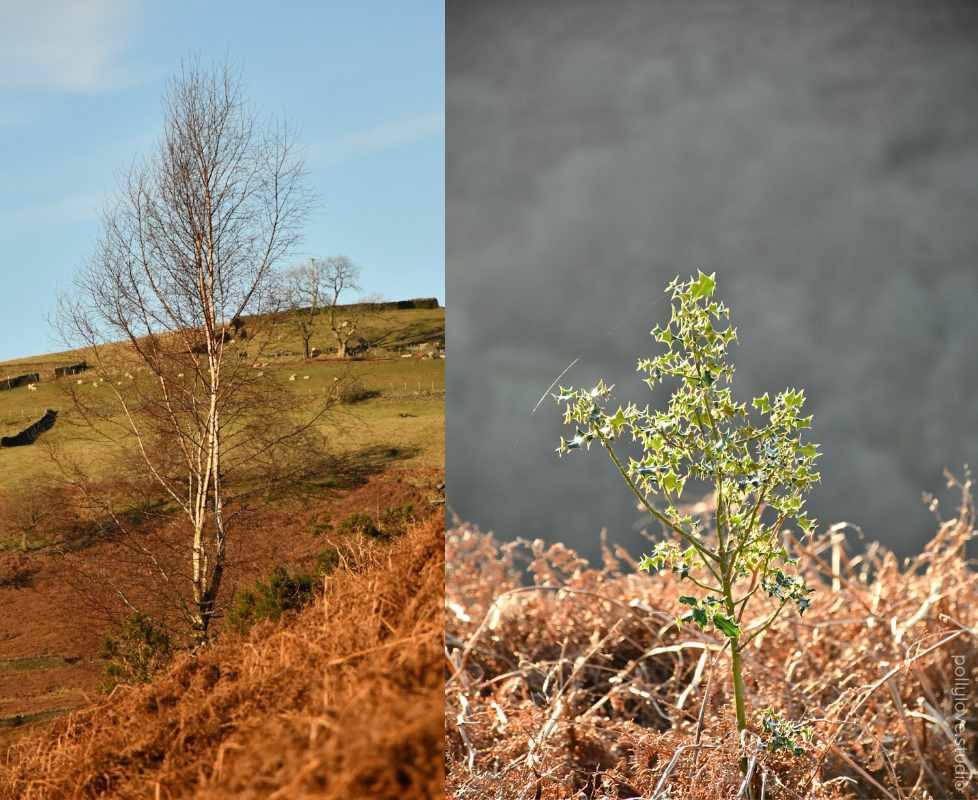
In recent times, only individual trees dotted here and there could be seen on the Common with most of them appearing on Cefn Gelligaer. These self-seeding trees show us that, with less grazing, the Common would probably be covered in forests even today. There is a rowan near Capel Gwladys and another near the Graig Fargod Chapel. There is also a small clump of ash amongst the ruins of Pen Marc. An alder grows near Nantwen farm and a beech near Clwydtrawscae farm. On the slope close to Nant Ddu stream there is a silver birch and a little further north, on that same slope, a holly grows.
The locations of these trees are interesting. Rowan is also known as mountain ash as it often grows on higher ground. In Wales it was often grown outside the house as protection against evil spirits and it was also planted near chapels and churches to protect the spirits of our dead. How interesting to see them growing near Capel Gwladys and Graig Fargod chapel. The mountain ash is called y gerddinen in Welsh. Interestingly, the original Welsh name for the village of Nelson is Ffos y Gerddinen which means the moat or the ditch where the rowan tree grows. The rowan / mountain ash is obviously an important tree in our area.
Alders are trees that love water and often grow near rivers and streams. Nant is the Welsh word for stream and again it’s interesting that an alder can be seen close to Nantwen farm.
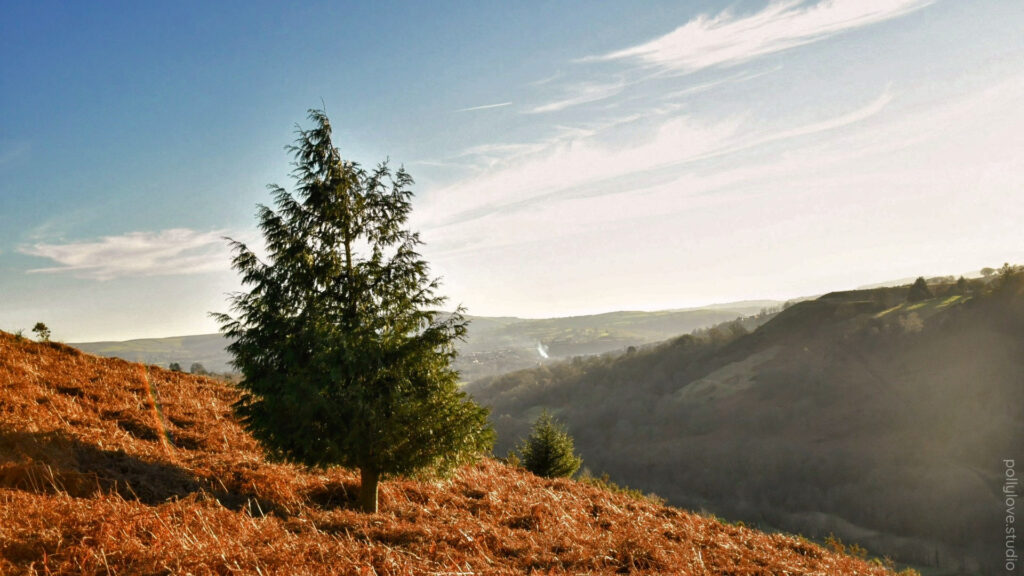
There is a beauty to the dark silhouettes of these trees standing against a sky splashed with colour by the low winter sun. By February, if you look closely, you will see that the buds have started to grow again. A sign that the spring is quietly on its way, after all.
The beautiful photographs in this blog piece were taken by the artist @pollylovestudio


