

| Something Told the Wild Geese by Rachel Field Something told the wild geese It was time to go, Though the fields lay golden Something whispered, “snow.” Leaves were green and stirring, Berries, lustre-glossed, But beneath warm feathers Something cautioned, “frost.” All the sagging orchards Steamed with amber spice, But each wild breast stiffened At remembered ice. Something told the wild geese It was time to fly, Summer sun was on their wings, Winter in their cry. |

September is a ripe, overflowing time: the hedgerows, the fields, trees full with fruit. Often the sky is still a high blue, the light of the sun golden. But as in the poem at the beginning of this piece, there are whispers of winter on the horizon and an agitation of the air reminds us that the season is about to turn.
Already, leaves on trees and within the hedgerows are turning yellow, and across the Common’s moorland we are also seeing the bracken change colour.
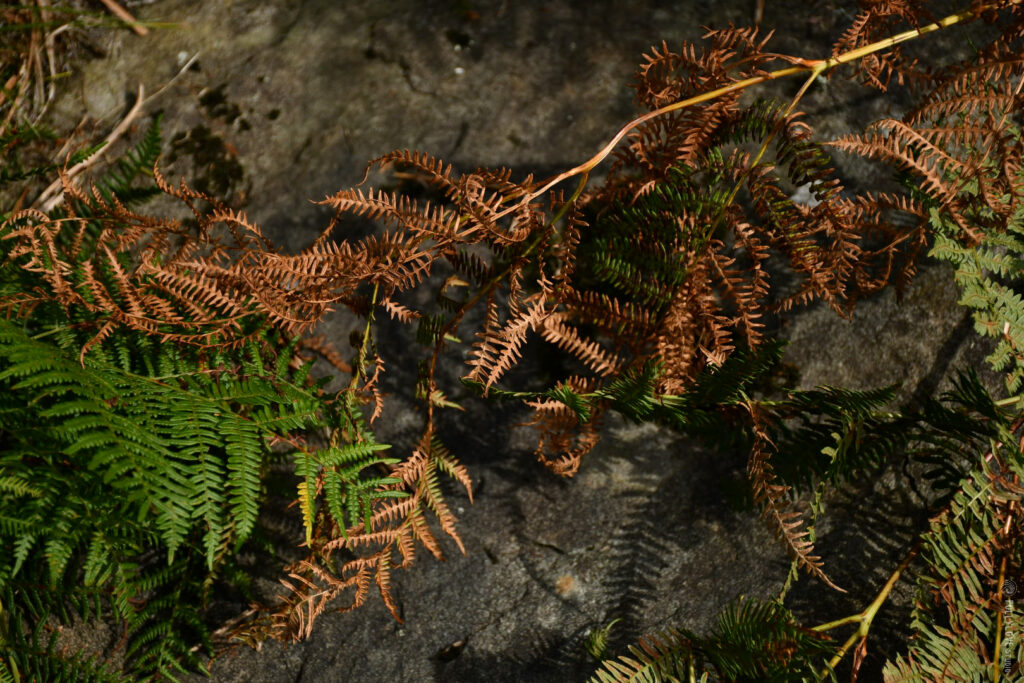
In a few weeks’ time our hills will be a rust-coloured carpet as a result of this change, their hue matching the Pennant stone protruding from rock outcrops and old quarries.




Bracken in Celtic Folklore

Bracken has a long history in Celtic folklore. In Irish folk history bracken appears in the story of Nechtan, King of Munster and Bres King of Ireland. Bres was told that to cure his wife’s infertility he would need to drink huge quantities of milk. He made this possible for himself by raising milk-taxes on Irish households: he would take 100 cans of milk from all hornless dun cows. Dun cows are a greyish brown colour and Nechtan owned many of these cows.
To avoid the milk-tax he built a big fire of bracken and used the ash, mixed with flax seed and water to paint their coats black. In other versions of the story he drove his cows through smoking bracken in order to singe their coats black – but in both stories bracken plays a significant role. It also appears in one of the Gelligaer and Merthyr Common’s most well known stories about Gwladys, daughter of Brychan Brycheiniog. Gwladys hid in the bracken and fell asleep there with the man she loved, Gwynllyw. You can read their story in January’s Notes from the Common.
In a Scottish folk song called ‘Tha mi Sgìth’ we are told the story of a fairy who was cutting bracken when he fell in love with a beautiful girl who came walking by. The feeling was mutual but when the girl’s family found out about their love they locked her in her room to stop the two from meeting. It’s the fairy’s words we hear in the song, which is also known by the name ‘Buain na Rainich’ which means ‘Cutting the Bracken’.
Listen to the song here: https://www.youtube.com/watch?v=DqfKigp99cY


Bracken or Fern?


Many people, including farmers simply call Bracken, ‘fern’. Bracken is a type of fern and is the most common (and largest) fern in Britain and Ireland. Its Latin name is Pteridium aquilinum and it can grow to a height of six feet – and does so in many areas of the Common. It is found on every continent apart from Antarctica.
As we move into Autumn, the bracken will slowly die, turning from a deep dark green to a rusty-brown colour that will dramatically change the appearance of the landscape. It favours dry, acid soils and can spread at a rate of one metre per year by underground rhizomes. There is an estimated 62,700 hectares of Bracken within Cymru/Wales.

Bracken and the Environment


Dense stands of bracken with a thick mulch layer (from previous years growth) are often very poor for wildlife. The plant and its strong rhizomes can also damage archaeological features. However, bracken at low densities can support woodland plants such as Bluebells and the Common Dog Violet which is the main food source of several threatened fritillary butterflies. The Curlew was written about in August’s blog and it is also extremely important that bracken is left alone in areas where they live, as curlews build their nests on the ground.
Bracken can also be an important feature within Ffridd (upland fringe), heath and established woodland habitats. It is a ‘pioneering’ species, so, along with fellow pioneers like moss and lichen, it is able to colonise arid land in order to prepare the way for other plants to blossom and thrive in years to come. It is thought that Bracken indicates the historic extent of woodland as it is believed to originally have been a fern of open woodland in Britain. However, with a changing climate, increased atmospheric nitrogen (which has a fertilising effect) and changes in management practices this may no longer be the case.
Bracken and wildfire
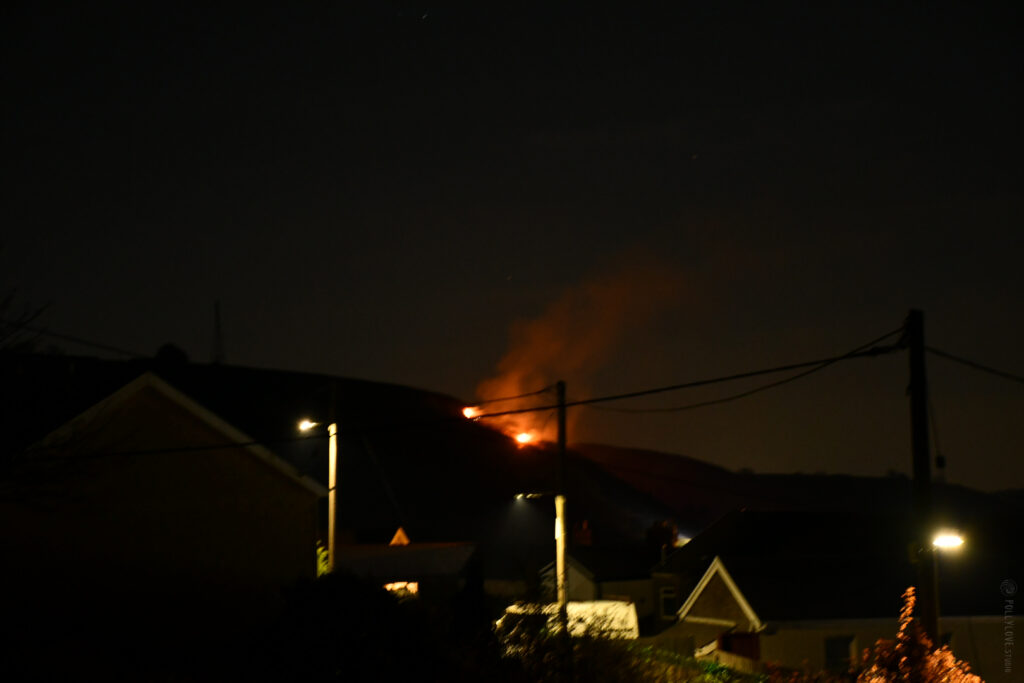
Unfortunately, one of the main fuel sources of wildfires within the South Wales valleys is dead bracken. As Bracken is a perennial, it dies every year before regrowing in the same area. The build-up of each year’s growth creates a thick mulch layer which not only impacts biodiversity but, when dry, is highly flammable. As these fires often occur when the Bracken is dormant, fires do not impact the plant and can actually benefit it by clearing the mulch layer and create nutrients for the plant (potash).
Wildfires obviously impact local communities through air pollution, diverts our emergency services away from other potential call-outs whilst impacting wildlife, grazing animals, water quality and future impacts climate change.
Bracken and Agriculture
Bracken is often considered an unwanted weed much like nettles or dandelions. However, just like those other ‘weeds’, historically bracken was a valued resource and used for bedding, as a mean of keeping carrots during the winter, for thatching roofs and a potash for soap and glass. Those who suffered with sciatica or pains in their legs would walk through smoking bracken in order to alleviate symptoms and the leaves were eaten in order to clear the stomach or to sooth problems of the spleen and colon. It is apparently a good lining for hanging baskets.
It was the women’s job to collect bracken, and it was difficult, physical work. Women on the high moorlands cut and bundled bracken to carry home. Because of its usefulness and subsequent harvesting, bracken would not have spread as widely as it has today.
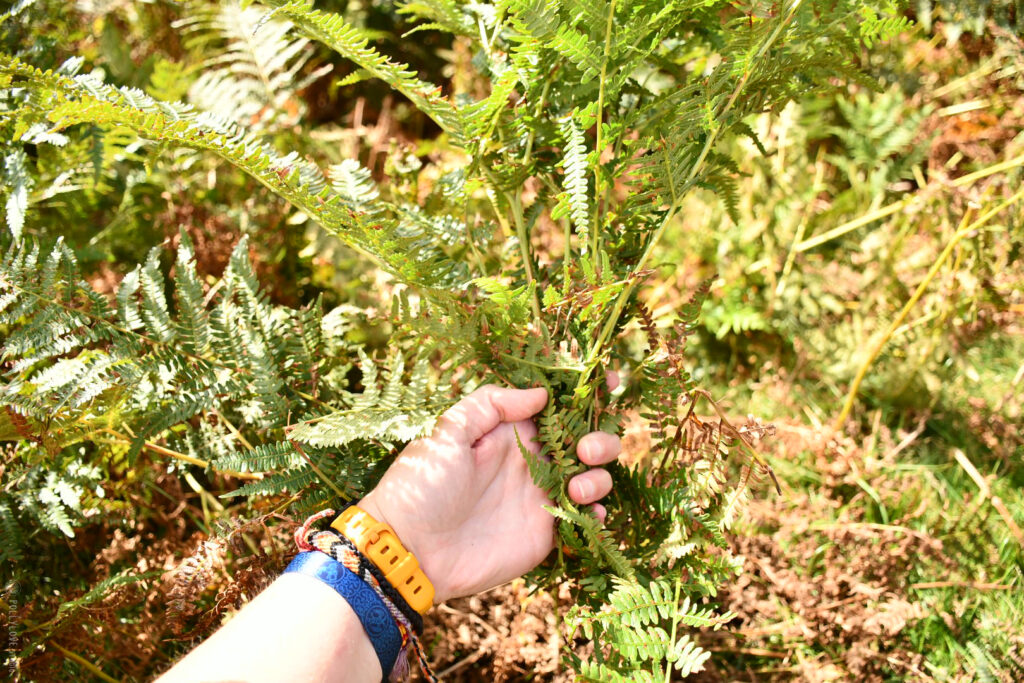
Bracken normally indicates ‘good’ fertile soils as indicated by this traditional Welsh language proverb;
Aur dan y rhedyn;
Arian dan yr eithin;
Newyn dan y grug.
—-
Gold under bracken;
Silver under gorse;
Starvation under heather.
Thankfully, several graziers of the Common still cut and bale bracken for animal bedding. This important activity helps to contain the spread of the plant whilst retaining open areas for grazing animals, wildlife, access for the public and it also reduces the overall wildfire risk. Bracken bedding is used inside of ‘buying-in’ straw and is great example of using a sustainable local product. Unfortunately, bracken can also harbour sheep ticks which can cause animal welfare issues for livestock and knock on financial implications. With the increased prevalence of Lyme disease which ticks can carry, we may see ticks and Lyme disease impacting humans more often in the future.
Bracken Management
Bracken can be managed by spraying (chemicals), cutting or crushing/bruising (mechanical or heavy livestock) although treatments have to be maintained to be successful.
As an organisation which is committed to the environmental, social and community enhancement and management of the Common whilst ensuring it remains a food producing area for future generations, bracken management is a key element of our work. It can take up to ten years to lessen the bracken’s growth by cutting, but it is kinder to our land and to the environment that using chemical treatments.

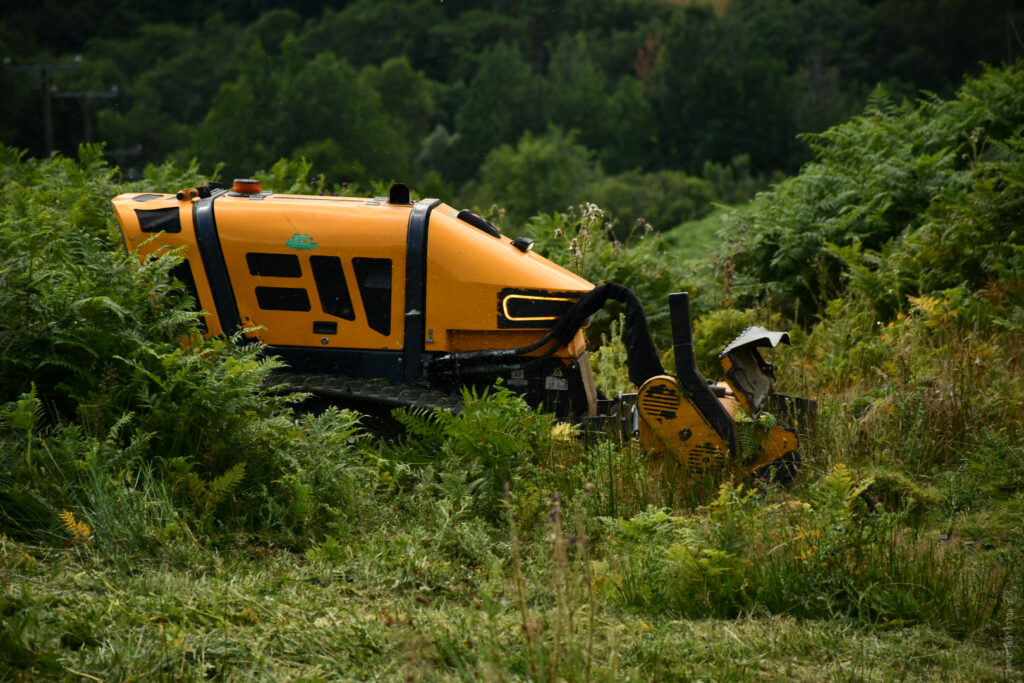

In addition to the areas where graziers cut and bail bracken for bedding (mainly the southern areas of Cefn Gelligaer), we undertake targeted bracken cutting and also work with South Wales Fire & Rescue service (SWFRS). Where funding allows, we undertake cutting at livestock turn out points and along established fire breaks. Our preference is two cuts in each area during the growing season. Multiple cuts over several years dramatically weakens the plant and opens up areas for grazing animals to access and increases a mixed sward of species. Recent works have seen a remote-controlled cutter being used in the Taf Bargoed area of the Common and brush-cutting of sections of the Red Kite Walking trail. Keeping trails open allow continued use by members of the public. This footfall helps stop the encroachment of Bracken as the plant does not tolerate compacted soils well.


We have undertaken tree planting in bracken dense areas with the long-term aim of shading bracken to reduce the vigour and spread of the plant in areas which are no longer grazed and/or alongside streamside corridors. We always follow the mantra of the right tree, in the right place for the right reason. Appropriate tree planting can also provide multiple benefits by providing shade and shelter for livestock, increases biodiversity, creates new habitats etc.


The South Wales Fire and Rescue Services are adopting a proactive approach to wildfires and where resources, ground conditions and permissions allow, they cut or roll (bruising) bracken and other problematic species. South Wales Fire and Rescue Services have provided assistance with targeted management of bracken over the last several years which has been gratefully appreciated. They prefer rolling the bracken with a specialist bracken rolling machine and cutting the dead mulch layer during the Autumn and winter periods.


